Tuesday, June 5, 2012

Prepare Yourself

It all starts around this time. The Japanese Beetles emerge from a warmed soil and begin to hunt for food. It is not long before they mate and the female burrows into the soil and lays her eggs. Forty to sixty eggs in her lifetime! These developing beetles then spend the next 10 months in the soil as white grubs. These grubs feed on the roots of turfgrasses and vegetable seedlings, surviving in any soil in which plants can live. As these grubs chew off the roots, they reduce the ability of the grass to take up enough water to withstand the stresses of hot and dry weather, resulting in large, dead patches. As the grubs destroy your lawn, the mature beetles feed on over 300 species of plants, devouring leaves, flowers and overripe or wounded fruit. A tree that has been severely damaged by Japanese Beetles appears to have been scorched by fire.

One of the most devastating pests of urban landscapes in the United States, Japanese Beetles are a force to be reckoned with. Traveling and eating in groups, they do the most damage. The beetles are most active on warm, sunny days and prefer plants in direct sunlight. When laying eggs, the female beetle seeks out moist, grassy areas, as adequate moisture is needed to keep eggs and newly-hatched grubs from drying out. Excessive rainfall or heavy watering of lawns does not bother them. June is the month they descend upon us, as adults emerge from the soil and begin feeding on plants. It is most intense over a 4 to 6 week period beginning in late June, after which the terrorizing beetles gradually die off.

Now is the time to prepare yourself.  Though it has begun, we have time to stop them from destroying our gardens.  At Strange's, our mission is your gardening success and we mean it.  We want you to arm yourself, and not give up without a fight.  You've worked too hard on that pristine lawn and perfectly healthy garden to let the Japanese Beetle win.  Below we share a few products you can find at Strange's that will put the odds in your favor.


Sevin Ready-To-Use: This ready-to-use liquid bug killer is designed to kill over 100 insects, including Japanese Beetles.  It provides excellent control of leaf eating and sucking insects.  This spray does not require any mixing and is perfect for spot applications on your outdoor flowers, fruiting plants, and vegetable gardens.

Captain Jack's Deadbug Brew: This product contains Spinosad, a naturally occurring soil dwelling bacterium.  This makes Captain Jack's an organic pesticide and safe to use for indoor gardening.  It targets a multitude of insects, including the Japanese Beetle.  This product may be applied directly from the container.
Safer Brand Japanese Beetle Trap: This trap uses a food and sex attractant to lure insects into the trap and disrupt the mating cycle.  A controlled release system maximizes the life of the attractant and protects it from environmental degradation.  Place this natural pest control trap at least 10 feet away from plantings to prevent defoliation.

Monday, May 28, 2012

A fighting chance for this old Crab Apple

We recently had a really good question on Facebook from our Customer Chris concerning his large Crab Apple tree.  He has graciously allowed us to repost important parts of the conversation and photos for all to learn from.

"I have a HUGE crabapple tree (about 25' tall and about 30-35 wide) that is beautiful when it blooms in the spring and is perfect shade tree for the patio that it grows over. Unfortunately, every year around this time the leaves begin to develop brown spots, start to yellow, and fall off (the foliage is very dense until this point). I have tried spraying it with neem oil per one of your employee's recommendation, but that to no avail.

I recently tried introducing ladybugs to it that I bought from you, thinking it might be spider aphids, so hopefully that will help somewhat.

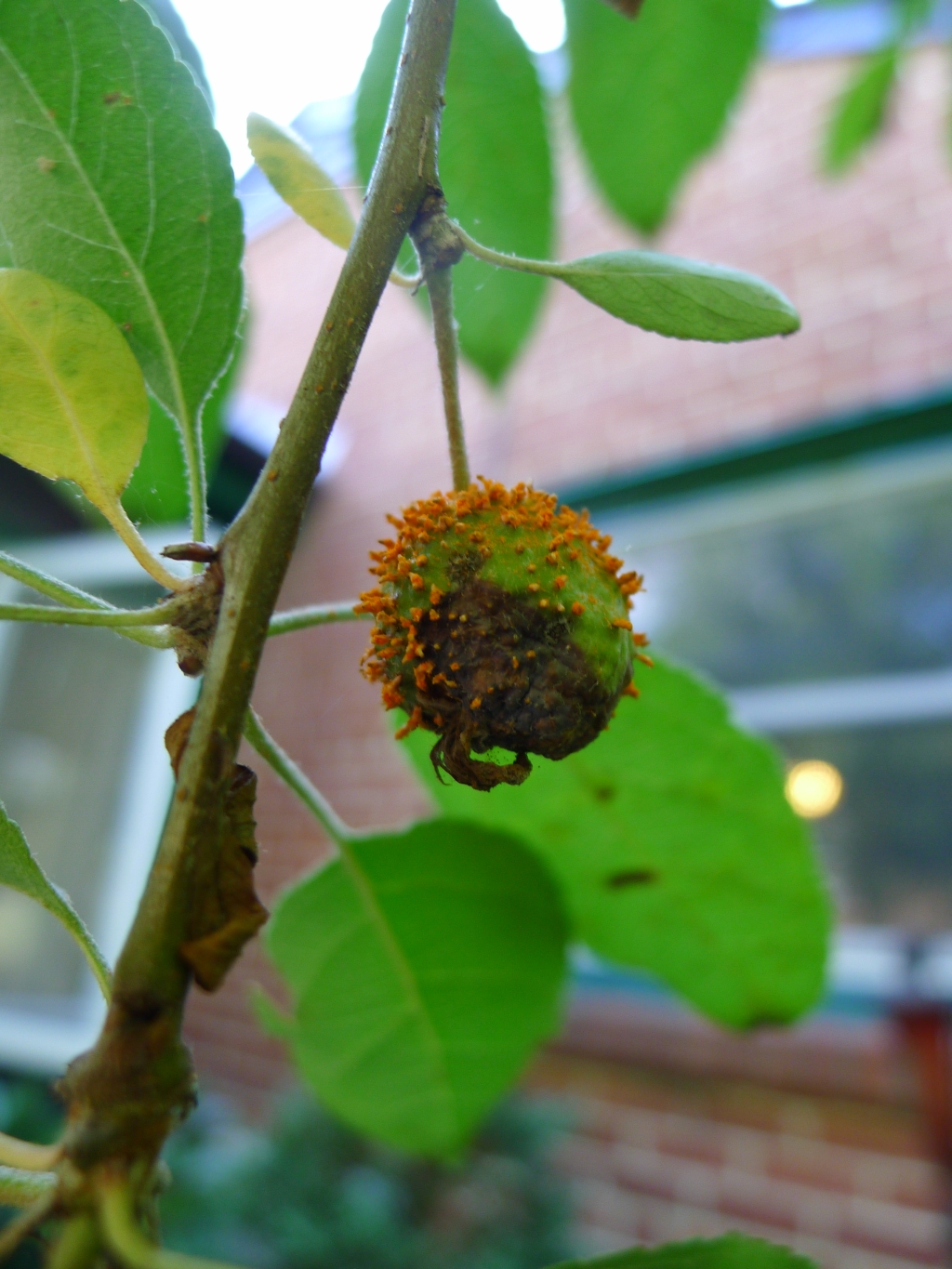
At this rate, 80% of the leaves will be gone by late August. Of note, around this time of year, it develops a growth that comes out of a hole where a limb was cut off a very long time ago (see picture included).

It looks and feels like fungus of some sort and drips sap out the bottom of the hole. I have also noticed when pruning some branches that were about one inch thick, that there was a redish/dark brown ring about 1/8 of an inch below the surface. This series of events started abruptly one summer about 4 years ago.

I love this tree and would hate to see it die, but I understand crabapple trees can be finicky (especially when they are 20+ years old). If I could keep it the way it looks for the first few months during the spring I'd be a happy camper. Any advice you might have would be greatly appreciated. Thanks for all your help with my garden this year, the rest of it looks great!"

He attached some photos:


The folks in the nursery think that this is a systemic (whole tree) fungal infection.  Generally the only way to take care of this is to use a whole-tree systemic spray as well as fertilize the tree to give it a fighting chance.    To be on the safe side though, we recommended Chris contact Joel Koci, an Arborist with Arborcare in Rockville, VA.

Chris is going to keep us posted on the happenings of this awesome Crab Apple and we are rooting for a win! (pun intended) 

If you have specific questions, please do shoot us a message on Facebook or email info@stranges.com and we will gladly help.  Detailed photo's like Chris' are a plus for both the assessment and as an example for other gardeners in and around Richmond. 

Monday, March 26, 2012

More Plants. Less Runoff. Healthier Bay.

Plants do more than just beautify our yards. They also go a long way in protecting the rivers and streams we all enjoy. That’s the message behind Plant More Plants, a campaign encouraging residents in Richmond (and the rest of the Chesapeake Bay watershed) to plant more trees, shrubs and hardy perennials in their yards to reduce storm water runoff. Strange’s is a proud partner in Plant More Plants.

Runoff pollutes local waterways and is a major cause of pollution in the bay. But strategically placed plantings — especially native plants — can help reduce runoff and absorb the excess nutrients it contains.
You can download four free landscape plans from the Plant More Plants website. These plans use Virginia native plants to lessen the impact of storm water runoff on our waters.

What exactly is a native plant?
Native plants are those that occur in the region where they evolved and often are adjusted to local climates and soils. They typically require less water, fertilizer and pesticide — in other words, they’re low maintenance! An additional benefit is that natives provide food and habitat for birds and butterflies.

As always, the staff at Strange’s can help you find plants that are suitable for your particular landscape.

On March 31, Strange’s Blooming Days will feature a free seminar about improving water quality with native plants. Chris Hale of BioForm Landscape Architecture will discuss specific natives that will look great in your yard and help absorb excess runoff. The seminar is scheduled for 2:15 p.m. Please join us!

Click here for more information about Blooming Days.

Tuesday, February 21, 2012

The Time for Crabgrass Prevention is Now!

You might not be aware, but the best time to rid your lawn of crabgrass is right now. The general rule is that crabgrass seed is "awoke" by three days of 50 degree temperature soil, which is usually at the very beginning of the growing season. The next few weeks will be the best time, as March kicks off the growing season. Here are a few products Strange's carries that can help you prevent crabgrass.

Scotts Step 1 for Seeding:Contains Tupersan Siduron. Starter fertilizer plus crabgrass preventer. Apply when seeding; allows grass seed to germinate while preventing crabgrass and other grassy weeds.

Hi-Yield Weed & Grass Stopper:

Contains Dimension. Prevent weeds & crabgrass from growing in lawns & landscape areas. Also contains some post-emergent crabgrass control.

Fertilome Crabgrass Preventer + Food:
Contains Team. Provides 12-16 weeks of pre-emergent crabgrass control. Wait at least 6-8 weeks before sowing seed.

Espoma Organic Weed Preventer:
Contains corn gluten meal. All organic -- child and pet safe. Can be used on lawns and garden beds. Don't use when seeding or over-seeding a lawn.

Hi-Yield Crabgrass Control:
Contains Balan/Treflan. Provides season long control of crabgrass & other weedy grasses. Doesn't contain fertilizer.

Fertilome For All Seasons w/Barricade:
Contains Barricade. Controls germination of grassy & broadleaf weeds. Wait at least 16 weeks before sowing seeds.

Remember -- with the exception of Scotts Step 1 for Seeding, all of the above products will PREVENT any kind of seed from germinating. The chemicals are unable to determine the difference between grass seed, vegetable seed and weed seed. Be sure to read the labels carefully before you use any of the products, and please, if you have questions, come in & ask us!

Monday, February 13, 2012

Featured Plant: Quince Storm

Featured Plant: Quince Storm series

The full name of this variety is Quince Double Take, with three color options: Scarlet Storm, Orange Storm, & Pink Storm. The idea is that you will do a double take when you see these large, double flowers.

Besides their beauty, these quince are thornless and deer resistant, making them a useful decoration for your yard. They bloom in early Spring and can grow from 36 - 48 inches tall, making this flowering shrub perfect for hedgings, mass plantings, mixed borders, or for a cutting garden.

They are mighty hardy in zones 5-8, so its no surprise they can be heat and drought tolerant once established, and that they need partial to full sun every day. With its easy maintenance and gorgeous spring color, Quince Storm is one perfect plant for any Virginia garden!

Friday, December 30, 2011

So Striking: the Winter series Camellias


Winter's Snowman Camellia

Another wonderful addition to the winter garden is the camellia, specifically the Winter series Camellias. The Winter series is the most cold hardy camellias to date, most being a Zone 6 and handling our Zone 7 weather easily.

They are so striking and beautiful, they can be used as a single flower in the garden or as an entire hedge. They can grow in height of around 6 ft., and spread in width to 5 ft. or more, depending on the variety, which makes them perfect for an alluring and evergreen privacy screen.
There are many gorgeous colors to choose from, from lavender to pink to white. At Strange's, we have several varieties available in our nursery in 1 gallon, 3 gallon or 7 gallon pots, including Winter's Charm, Winter's Darling, Winter's Fancy, Winter's Peony, Winter's Beauty, Winter's Cupid, Winter's Fire, & Winter's Snowman. A gorgeous flower and plant, including the Winter's series Camellias in your garden will add great interest and character.

Monday, December 19, 2011

Overwintering Experiment


It's frosty out there! During the winter season, some plants will survive, some will die, and some will need to be covered or taken indoors. Here at Strange's, we're always trying to figure out easy ways to keep our plants happy and healthy.

Bonsai trees, like other temperate climate plants, need to go dormant over winter. Tricking your plant into sustaining growth will eventually lead into a forced dormancy, which is stressful and usually fatal. Most plants have internal clocks that tell them when to go dormant, so keeping your outside plants outside keeps everything running smoothly.

Even so, they need protection, and some of our greenhouse staff have come up with an interesting way in keeping our bonsai tree's roots warm. At $2.49 a bag, giving your potted bonsai tree a snug little mulch home is an easy and cheap way to make sure it's protected while also letting it stay outside.