Showing posts with label insects. Show all posts

Thursday, June 20, 2013

Butterfly Gardening! Tips for attracting pollinators


Hey there, fellow gardeners!

As plant lovers, we know how to get excited about new green shoots in the Spring and beautiful blooms in the Summer, and we know that all the wonderful things that happen in the garden wouldn't be possible without our good friends, the pollinators. So let's take a moment to get excited about the hardest-working visitors to our gardens--butterflies, bees, and other insects!

First up, the butterfly.

What a beautiful treat it is to watch these pretty little creatures flit among the blossoms of your garden!


In addition to adding color and fun to your garden, butterflies contribute greatly to the pollination that happens in nature. They typically like to pollinate bright, colorful blooms and they do most of their best work during the day.

Next up is the bee!


Talk about proficiency! Bees are the work horses of the pollinators; from dawn until dusk you can find more than a few bumbling buddies hard at work pollinating plants. There are several different species of bees that serve as pollinators, and together they are responsible for a good portion of the pollination that occurs.

Lastly, let's talk about other insects!
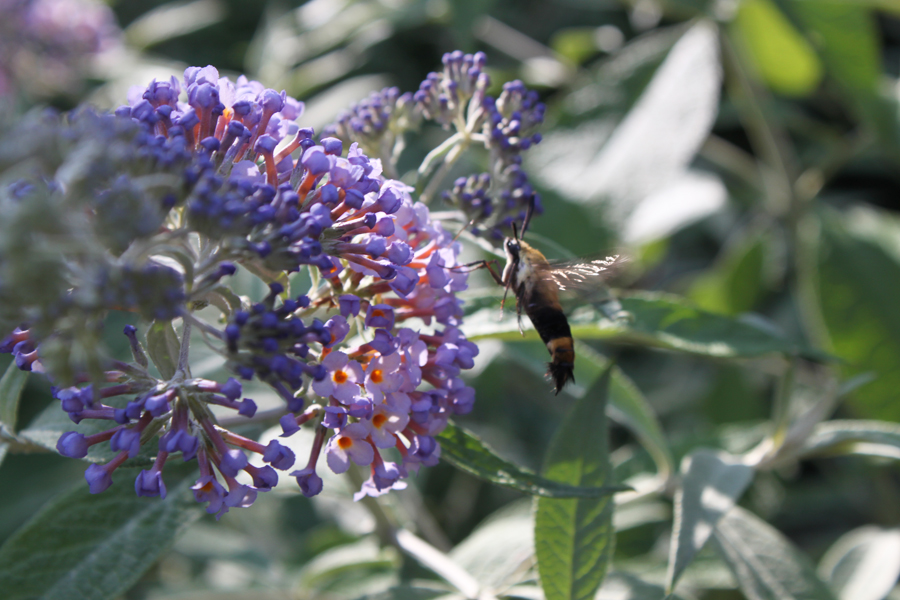

Though butterflies and bees are arguably the most easily recognizable pollinators, there are myriad other insects that play a huge role in pollination! Moths like the Cloudberry Clearwing Moth (pictured above) along with various flies, beetles and wasps are an integral part of the pollination team. Next time you're out in your garden, notice how many of these visitors are poking around!

As stewards of our environment, it's important that we actively encourage the success of the various pollination species in our own green spaces! Without pollinators, our plant culture (both ornamental and crop) would be in big trouble!

So what can you do to help determine the success of pollinators?

An easy (and enjoyable!) approach is to encourage the various members of the pollination team to visit your garden by featuring plants species that attract pollinators. Here are a few beautiful choices that do well in the Mid-Atlantic:

YARROW
Perennial
Full Sun

GAURA
Perennial
Full sun- part shade

LANTANA
Annual
Full Sun-Part Shade

ECHINACEA (Cone Flower)
Perennial
Full Sun-Part Shade

SPIREA
Shrub
Full Sun-Part Shade

For more great information on plants that attract butterflies, check out this page by Morton's Arboretum!

Happy [butterfly] Gardening!

Monday, May 27, 2013

We Love Ladybugs


Have we mentioned how much we love ladybugs? These cheerful insects have a lot going for them--in addition to their charming good looks and uncanny ability to congregate in your window sills,  ladybugs are great beneficials!

What does that mean? A 'beneficial' is an insect that benefits your garden by reducing the populations of pest species. For the environmentally-conscious gardener, encouraging ladybug populations in your garden means that you can control the populations of undesirable insects that harm your plants (like aphids, scales and mites) simply by letting the ladybugs eat!


Introducing ladybugs into your garden is an easy, environmentally responsible way to control pest damage in your garden. You can purchase ladybugs from your local garden center (including our garden center if you're a Richmonder) and bring them home to your landscape. We recommend giving your garden a quick squirt with the hose just before setting your new ladybugs free so that the damp foliage entices them to get comfortable. Ladybugs do best in their new environment when they are released in the evening.

The ladybugs that we offer are 'pre-conditioned' which is an important distinction to look for when you are purchasing your ladybugs. Basically, pre-conditioned ladybugs are more likely to stick around your garden than to disperse to find insects to eat. When ladybugs become active for the season, their instinct is to disperse. Pre-conditioned ladybugs are already somewhat active and are therefore less likely to leave your landscape!


If you've seen aphid damage in your garden before, we recommend introducing ladybugs soon. Don't let the damage get too bad before you bring in the beneficials- while ladybugs are great at reducing future pest feasting, they can't do a thing to reverse existing damage!

Happy Gardening!


Friday, September 21, 2012

Common Pests in the Cool Season Garden

 
This extreme damage is the reason why we care about monitoring our cool-season crops for common area insect pests.  Only a handful of worms likely did all of this damage, essentially ruining the chances of any harvest.  Careful scouting and monitoring, along with some timely, organic controls, is essential in winning the battle against persistent pests.
The best way to predict whether you'll have to deal with these pests is to take a look around in late Summer/early Fall.  If you see any of these "adult" moths/butterflies floating around your existing garden, chances are you'll soon see their nasty off-spring (larval forms).

Cabbage White Butterfly 
Imported Cabbageworm larva


Adult Moth (Trichoplusia ni)


Cabbage Looper
Adult Moth (Evergestis rimosalis) 


Cross-striped Cabbage worm larvae 


One thing you can look for -- hard evidence!  Worm droppings:


Also, keep in mind that tomato hornworms are still out there as well!  They don't just go for tomatoes; they're known for eating almost anything!

Tuesday, June 5, 2012

Prepare Yourself

It all starts around this time. The Japanese Beetles emerge from a warmed soil and begin to hunt for food. It is not long before they mate and the female burrows into the soil and lays her eggs. Forty to sixty eggs in her lifetime! These developing beetles then spend the next 10 months in the soil as white grubs. These grubs feed on the roots of turfgrasses and vegetable seedlings, surviving in any soil in which plants can live. As these grubs chew off the roots, they reduce the ability of the grass to take up enough water to withstand the stresses of hot and dry weather, resulting in large, dead patches. As the grubs destroy your lawn, the mature beetles feed on over 300 species of plants, devouring leaves, flowers and overripe or wounded fruit. A tree that has been severely damaged by Japanese Beetles appears to have been scorched by fire.

One of the most devastating pests of urban landscapes in the United States, Japanese Beetles are a force to be reckoned with. Traveling and eating in groups, they do the most damage. The beetles are most active on warm, sunny days and prefer plants in direct sunlight. When laying eggs, the female beetle seeks out moist, grassy areas, as adequate moisture is needed to keep eggs and newly-hatched grubs from drying out. Excessive rainfall or heavy watering of lawns does not bother them. June is the month they descend upon us, as adults emerge from the soil and begin feeding on plants. It is most intense over a 4 to 6 week period beginning in late June, after which the terrorizing beetles gradually die off.

Now is the time to prepare yourself.  Though it has begun, we have time to stop them from destroying our gardens.  At Strange's, our mission is your gardening success and we mean it.  We want you to arm yourself, and not give up without a fight.  You've worked too hard on that pristine lawn and perfectly healthy garden to let the Japanese Beetle win.  Below we share a few products you can find at Strange's that will put the odds in your favor.


Sevin Ready-To-Use: This ready-to-use liquid bug killer is designed to kill over 100 insects, including Japanese Beetles.  It provides excellent control of leaf eating and sucking insects.  This spray does not require any mixing and is perfect for spot applications on your outdoor flowers, fruiting plants, and vegetable gardens.

Captain Jack's Deadbug Brew: This product contains Spinosad, a naturally occurring soil dwelling bacterium.  This makes Captain Jack's an organic pesticide and safe to use for indoor gardening.  It targets a multitude of insects, including the Japanese Beetle.  This product may be applied directly from the container.
Safer Brand Japanese Beetle Trap: This trap uses a food and sex attractant to lure insects into the trap and disrupt the mating cycle.  A controlled release system maximizes the life of the attractant and protects it from environmental degradation.  Place this natural pest control trap at least 10 feet away from plantings to prevent defoliation.

Friday, June 17, 2011

Japanese Beetles

It’s that time of year again…Japanese Beetles have returned! The long metallic green beetles with copper-brown wing covers are here to attack and eat all sorts of plants. The adult Japanese Beetle emerges from under your lawn in June to begin feeding. They usually stay active for 4-6 weeks beginning in late June. An individual beetle will live from 30-45 days. They feed on about 300 species of plants. They devour leaves, flowers and overripe or wounded fruit. They tend to feed in groups starting at the top of the plant and working their way down. The damage done to your plants is not from just one beetle. It is from a whole group that destroys everything.
At Strange’s our certified horticulturist recommends a few different products.
  1. BEETLE TRAPS- These traps have both male and female lure attached to them, so you draw both sexes at the same time. Once the beetles are trapped in the bag, they’re not getting out, so you never have to worry about them again!
  2. SEVIN- Sold in either powder or crystal and contains carbaryl. As the beetle eats whatever has been covered with Sevin, they ingest the chemical and they die. If you want a safer product use Eight from Bonide.
  3. HARI KARI- Used as a contact killer. You see ‘em you spray ‘em, you kill ‘em.
  4. MILKY SPORE- An organic long term treatment. Apply from April to October any time the ground isn’t frozen to prevent spread of grubs. As the spore works down into the soil, the grubs come along, ingest the soil, and the spore multiplies within the grubs so they die. When the grub dies, the spores are redistributed back into the soil so that more grubs can pick them up and follow through on the cycle.
  5. K-NEEM - Neem is an organic product produced from the oil of the neem tree. It is extremely effective at controlling Japanese beetles, along with other insects. It will even treat powdery mildew.

Friday, November 6, 2009

The Winter Pansy's Worst Nightmare!

Winter pansies love this time of year. The cool temperatures and dry air cater to their every need. However, it is also prime season for the dreaded and dangerous pansy worm! If your pansies show signs of browsing damage, be sure to zoom in for a closer look. These caterpillar bugs are red and black; they chew on the tender leaves and blooms, making your pansies look more like swiss cheese than flowers. Fertilome's Dipel Dust is a biological worm killer that we carry here at Strange's.


One bite of treated foliage and within minutes worms stop feeding and eventually die. This granular applicant is easy to use for killing Tomato Hornworms, Bagworms, Armyworms, Webworms, Gypsy Moth Larvae, Cankerworms, Loopers, Tent Caterpillars, Tomato Fruitworms, Sod Webworms, Variegated Cutworms, Imported Cabbage Worms, Rindworms, Melonworms, and more! Simply dust this product on plants at the rates listed on the package. Dust to thoroughly cover all plant surfaces. Apply when pests appears and repeat as necessary. Available in a four pound bag, Fertilome's Dipel Dust will kill a wide variety of Leaf-eating caterpillars that can severely damage and kill vegetables, shrubs, lawns, and flowers, including your precious winter pansies!


Written by Ginny Gregory.

Tuesday, October 27, 2009

Do Your Cole Crops Look Like This?!


This time of year is prime season for cole crops! For many varieties we recommend harvesting after the first hard frost, which tends to affect the taste and texture of leafy greens for the better. However, a very common and malicious pest also travels to your crop beds to munch on the tender shoots before we even have a chance to enjoy them in our own tummies! Even one lonely caterpillar can wreak havoc upon an entire garden, favoring cabbage, kale and collard greens much to the dismay of our green thumbs.


Thankfully the solution to this issue is simple to find and easy to use in the bacterial disease that quickly and effectively turns those wormie bugs into instant fertilizer. As a naturally occurring chemical in soil around the world, Bacillus thurigiensis is safe to spray on any vegetable crops and can be rinsed off of your future side orders with a heavy scrub from the kitchen faucet. This compound can be found in Safer Brand Caterpillar Killer available in an 8 ounce concentrate that should be mixed by the teaspoon into your gallon size sprayer. Caterpillars stop feeding shortly after eating foliage sprayed with Caterpillar Killer and die within a few days. Caterpillar Killer does not harm honey bees or beneficial anthropods and does not harm earthworms. It is the safest and most effective treatment, but be sure to apply at the first signs of damage as these creepy crawlies can quickly decimate your cole crops!


Written by Ginny Gregory.


Monday, September 28, 2009

Insecticides Found Safe for Pets and Children!

I've got a brand new puppy running around my backyard and she's chewing on everything! My other two dogs do enough damage to the lawn on their own, but now almost all my shrubs have teeth marks! Aside from this canine cosmetic damage, I'm also worried about how insecticides and pesticides can affect my domesticated critters. It is comforting to know that I can come into Strange's and pick up the latest, most effective and safe treatments, which are also natural and organic. Manufactured by Organica, K+Neem comes from the seeds of the Indian Neem Tree. It is an effective alternative to chemically based insecticides and fungicides. K+Neem controls a wide range of mites and insects in all stages, and is effective against powerdy mildew. K+Neem is OMRI certified--so you know it's safe. It is the natural choice for flowers, vegetables, herbs, trees, shrubs, lawns, roses and houseplants.

Bonide also produces a natural dust product, Rotenone which can be mixed into a spray to control insects on fruit, flowers and vegetables. It can be used as a dust on dogs and cats to control fleas, ticks and lice as well. Capsaicin, the active ingredient in Hot Pepper Wax Insect Repellent, is derived from hot Cayenne Peppers and is proven very effective in deterring aphids, cabbage loopers, beet armyworms, spider mites, and whiteflies. An environmentally conscious company, Pharm Solutions has developed multiple products to combat garden pests and fertilize organically. Flower Pharm and Garlic Pharm help to repel aphids, thrips, white fly, cucumber beetles, spider mites, and aid in the control of rust, mildews, and fungi. Many of the natural ingredients within Espoma's Earth-tone Insect Control are also used to produce animal feeds and hence, are safe to use around animals and children while also controlling a wide range of insect pests. With these products on the market, I feel confident using them on my plants and my dogs. I know whenever the neighborhood kids come around, my insecticides will not harm them as they run and play in my yard. Although the hot pepper wax and Garlic Pharm will likely cause a mild upset tummy for my puppy if she ingests a large amount, at least I know I can combat those garden pests without subjecting my pets to any lethal toxins.

Written by Ginny Gregory.
www.Stranges.com

Monday, August 31, 2009

Got Mosquitoes? Tell Them to Buzz Off!


Mosquitoes are a constant worry for everyone no matter how little time you spend outdoors! They are a menace to household pets and children as they carry numerous diseases. However, many products have hit the market in the last few years to aide in these efforts. Bayer, Ortho and Bonide all manufacture mosquito control products in granular and liquid form, including a propane fog applicator. The Citrosa, or Scented Geranium, is also a safe and natural method of mosquito control, an annual species which we carry in the spring. Visit us at Strange’s West Broad for these products and more to help with your everyday critter control. For information on non-beneficial insect control, please go to our website.


Written by Ginny Gregory.

Ewwwwww!!! What is that thing on my plant?


That funky new ornamentation on your shrubs that seemingly sprung up over night is not a hot new style of plant jewelry. Those oval shaped bags festooned all over your Arborvitae or Juniper are called Bag worms. These nasty little guys are easily visible once they have formed their spindle shaped bags. Large populations of bag worm larvae can strip plants of their needles and leaves. While deciduous shrubs and trees are able to produce new leaves within a 4-6 week period, evergreens are much slower to recuperate and the damage may be severe enough to cause eventual death. Plant damage is most noticeable in June, July and August. The bags are made up of silk and the vegetation the bag worm is feeding upon. On evergreens the bags can resemble a small pine cone, making it difficult to detect until the damage is done and the plant is partially defoliated. During this stage the bag is attached to the larvae which is dragged around as the nasty critter munches on your unsuspecting plant. The bag continues to grow as the larvae grow. When disturbed, the larvae will pull their head and upper body back into their bag and hold the top opening closed. Gross!! In early fall, when the bags are one to two inches long, the bags are suspended from branches and the larvae change into pupae before becoming adults. The adult male emerge as a moth and start their search for females. The female emits a scent to attract the male to her while remaining in her silken home. The male Bag worm inserts his abdomen into a hole at the bottom of the sack to mate, he will die shortly thereafter. The female lays up to a thousand eggs in her sack and then she will drop to the ground from the bottom of the sack to die. The eggs overwinter in their bag until May through June and emerge from the bottom of the bag. They spin a fine silk and either attach themselves to the same plant as their parents or are picked up on the wind and blown to the next plant over. There is one generation per year.

Bag worms are not that food specific but seems to prefer juniper, arborvitae, pine, spruce, and an array of deciduous plants. To control Bag worms use cultural and or chemical cultural control. Pick off by hand as many of the nasty bags as you can and destroy or burn them. If you choose not to go this route, (there could just be too many to pull off) then use a chemical spray. Sprays are most effective while larvae are in their newly emerged state or while feeding so apply May through August. Bacillus thuringiensis or Bt, Sevin, Neem Oil, Hi-Yield 38+ or Permethrin are good choices. There you go and good luck!!!

Ruth Whiter
Horticulturist

Thursday, August 20, 2009

Are These Bags Buggin' You?


Although these leafy bags appear harmless and often inconspicuous on mildly infested evergreens, bagworms are actually very aggressive and hungry pests! Bagworms are the larvae of moths. The characteristic brown bags are often seen attached to twigs in late August. The eggs hatch in May or June. Newly hatched caterpillars crawl out of the old bag and immediately begin feeding on leaves. “The bagworm feeds on trees such as Arborvitae, Juniper, Pine, Spruce, and many other evergreen species. It also attacks certain deciduous trees such as Black Locust, Honey Locust, and the Sycamore,” warns nursery worker, Eloisa.


If you think you have these hanging around in your garden, please visit our website to read more about bagworm control.


Written by Ginny Gregory.

Monday, July 6, 2009

Japanese Beetles Go Away!!

I was wandering around, looking at and smelling some beautiful roses the other day when I had a not so pleasant experience. Just as I was leaning down to smell a beautiful rose I get an eye full of these guys: Japanese Beetles.They're ugly and they do ugly things to your plants. They love to feast on all the pretty things in the garden- roses, crepe myrtles, azaleas, hibiscus.. the list goes on and on. But don't fear! Strange's is here to help you get rid of these nasty little critters. There are several different treatment options that work. Read about them here. So if you're having Japanese Beetle issues, pick up one of these remedies and get back smelling the roses. :)

~Jennie
Camera Girl and Japanese Beetle Exterminator